Observations of a Reluctant Mystic:

— My life of strange and enlightening experiences over six decades

I’ve known many people over the course of my life, but none seem to have had the number of strange experiences that I’ve had, beginning when I was a very young child. It started with out of body experiences, and over the years I have had between 1000 and 2000 of such occurrences, according to my rough calculations. When I was in my 30s I read that with practice I could have these experiences on purpose, so I began to practice every night. I read all that I could on out of body travel, including Robert Monroe’s seminal book, Journeys Out of the Body. This focus resulted in my having one nearly every night for several years on end. And about the same time I practiced lucid dreaming after having read university researcher Stephen LaBerg’s book on the subject. I also quickly learned to be lucid in my dreams.

But my forays with out of body experiences were just the tip of the iceberg. I have also run into various sort of otherworldly entities, including what is commonly called dark force entities bent on causing harm. I first encountered one of these in my son’s bedroom when he was still a baby and while I was traveling through the apartment out of my body. The next thing I knew I was engaged in a fight to the death. Obviously I won the battle, but I came away with a strange new power of sorts — the ability to increase my own size and strength in another reality. This would come in handy in future encounters with these same dark force beings. I discussed my encounters with dark entities with psychotherapist and folklorist Jo Hickey-Hall on her fascinating podcast called The Modern Fairy Sightings Podcast.

Although my life had been full of otherworldly visits with otherworldly beings since age five or six, when I was in my late 50s I began to investigate who I was beyond the superficial sense of self. I realized that there was more to this “other me” than just flitting around out of my body, psychic explorations, and philosophy. I grew an intense need to know myself in the tradition of the great saints of India, Sufism, Taoism, Buddhism, and so on. I had no interest in religion, just the most important part, which was an awakening to my own true nature.

My wonderful wife and I began reading and listening to enlightened gurus from India — Krishnamurti, Nisargadatta, Ramana, and a couple of others — so that we could discover for ourselves what they had discovered for themselves. The results were enlightening and I covered some of what I experienced in this book, Observations of a Reluctant Mystic: a journey into awakening.

I had never considered myself to be a mystic, but just a regular person who has strange, unusual, and revealing experiences in a place that I call non-physical in structure. My hope is that this book can guide readers back to their own essence if this is what they desire to do. For others it may serve as entertaining or a revelation of the possibilities and realities beyond the world of our physical senses, materialist science, and even the broad category of spirituality.

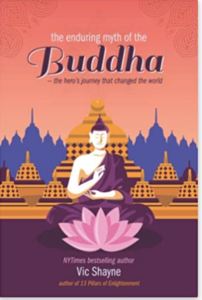
The Enduring Myth of the Buddha

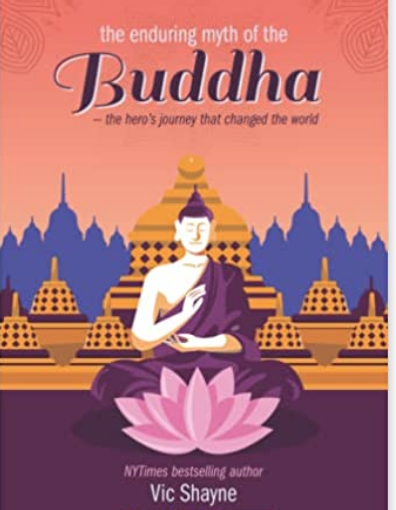
The story of Siddhartha Gautama, who became the Buddha, connects the human psyche to the transcendent. My new book, The Enduring Myth of the Buddha, is rich in metaphor that touches the heart and has the power to turn the egoic self back onto itself to question your very essence. 

Maybe you’re wondering: What the heck does this mean?

The egoic self is what we commonly call “me,” and we are referring to a person who we only believe we are — complete with ideas, memories, dispositions, preconceptions, fears, biases, and attitudes that interfere with our seeing life for what it really is, which is the source of suffering. To move past this egoic self is to end suffering and find a life of compassion; and this was the core of the Buddha’s teachings.

Siddhartha ultimately discovered that we suffer due to the way our minds are psychologically conditioned to believe we are separate from all others. Because we do not realize that everything is available to us, we are always desiring to get or attain something to make us feel whole and happy. To truly understand this fact of life takes enquiring into your own sense of self to find out what you are beneath this conditioned mind. And this is what Siddhartha had done, and once he knew he became the Buddha — the awakened one.

This book has little to do with Buddhism as a religion, and mostly to do with Buddha as a mythical figure whose life, actions, words, and relationships are full of power that bring to the fore compassion, humanity, love, respect, deep thinking, caring, and the transcendence beyond human suffering and desire. This is a light and interesting study that appreciates the metaphor and myth in the Buddha story to reflect on your own life. While it is most common to regard the life of the Buddha as an historical fact and a suggestion to quiet the mind and avoid attachment, the Buddha myth is really a much deeper teaching, and I have used the teachings of other enlightened persons who were able to elucidate what it means to be awake in a world otherwise perceived by the limited mind of the egoic self.

I am not a Buddhist nor a Buddhist scholar, and The Enduring Myth of the Buddha is not an academic work; I leave such writings to the experts. My interest in writing this book was to explore the depths of the myth, as well as to make it clear that a myth, despite popular misuse of the word, does not equate to a lie. Rather, a myth is a story that guides you back from the objective to the subjective to find out who you are at the core. As such, it does not matter whether you are a religious person, an atheist, or merely interested in a subject  that moves your thinking about your self beyond materialist, scientific, religious, and academic thinking.

The Buddha’s teachings have endured for millennia for a good reason that is fundamental to who we are as human beings, and if we regard his story literally then we are apt to miss the richness of his hero’s journey.

A leap into unalloyed consciousness

When I wrote Consciousness: The Potentiality of All Existence: Exploring reality and belief as a subjective experience, I knew I was jumping into turbulent waters, because there is such a huge divide between materialist science and spirituality. Strangely, as I discovered in the process of writing, both religious people and materialist scientists base their opinions about spirituality on beliefs. Both ends of the spectrum swear that they are right and that they have the answers to life’s questions, including what consciousness is. But it turns out that a belief is a belief, which means that the believer has no idea of what the truth is, yet this is what shapes most people’s opinions and actions.

Consciousness isn’t a book for everyone, because it’s quite honest in its approach to who we are and why we see the world in our own unique ways. Honesty does not sit well with the egoic sense of self. The self has been conditioned since birth to believe it is a body and all of the attachments and identities that go along with it. In essence, people are not who they take themselves to be; they are amalgams of thoughts that are unreliable, ephemeral, and changeable.

Although we are quiet complex people, this book is easier reading than it looks!

In Consciousness, I discuss all sorts of ideas of what consciousness is, according to the experts who ironically really do not know very much outside of their own guesses and iffy conclusions, whether they are scientists or self-proclaimed New Age experts. If you are alive, you are experiencing consciousness.

This book also dives into the many experiences in consciousness — near death and out of body experiences, dreaming, lucid dreaming, intuition, hallucinogenic trips, imagination, quantum entanglement, and more.

It’s so easy that it’s hard
So how do you get to the bottom of what consciousness is? The answer is so easy that it is mostly overlooked. In addition to my experience with many years of self-enquiry meditation, I turned to some of the most respected and profound teachers who have realized their own natures by waking up to what they are not. That’s right, what they are not. This means that we all have the ability to observe our own state of being and see where thoughts come from, how they rise and fall, and how they accrete to form a sense of self.

A number of gurus have taught about finding one’s true nature as consciousness down through the ages, from Buddha to Rumi, and from Jiddu Krishnamurti to Ramana Maharshi. These individuals have all said the same thing: You cannot rely on information, teachings, rituals, religion, ideas, thinking, or practice to realize consciousness; you just have to observe with great persistence, desire, and interest, and eventually it dawns on you who you are.

If you are too tied to your beliefs about who you are, as well as the teachings of New Age philosophy, religion, or materialist science, then don’t take this book personally. You can read it for an intellectual understanding. Or if you are brave enough you can look into your own self at the deepest level and in the process let go of your preconceptions and suppositions. Read the book and investigate your own nature. It’s quite rewarding if you can do it.

Happy reading!

#neardeathexperiences #outofbodyexperiences #dreams #quantumentanglement

Find out who you really are beyond the sense of self

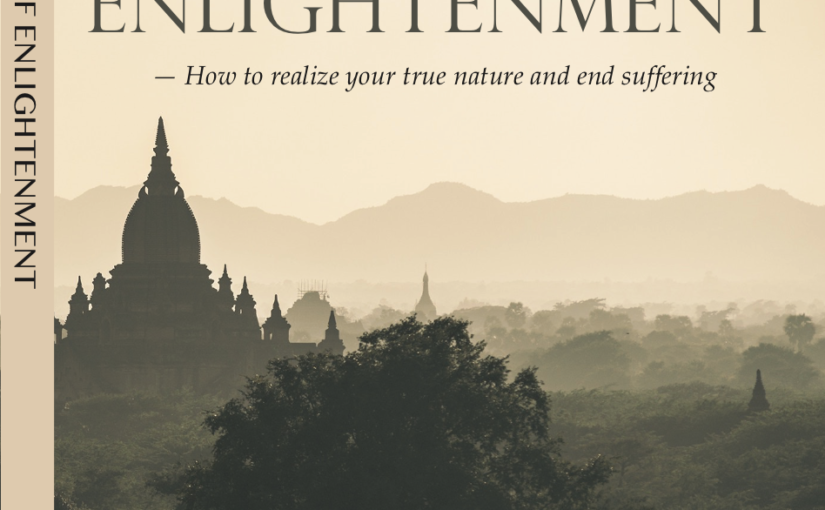
Recently I published several books about the mind and how it creates stress, happiness, illness, and even reality. The books are Stressing Out Over Happiness, and The Guidebook to Stress, Meditation and Happiness and 13 Pillars of Enlightenment, a novel based on my personal experience about what it means to awaken to reality beyond the limited sense of self.

This new work is a short narrative novel that leads you to find the most mysterious and illusive aspect of life throughout the ages. It’s been called self realization, enlightenment, illumination, and realizing your true nature. However, such terms are relatively meaningless except on an intellectual level. At best they can point to what exists behind that which we call the mind, body, and reality.

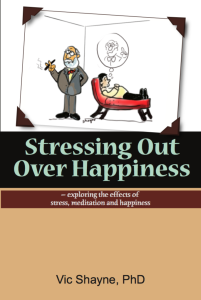
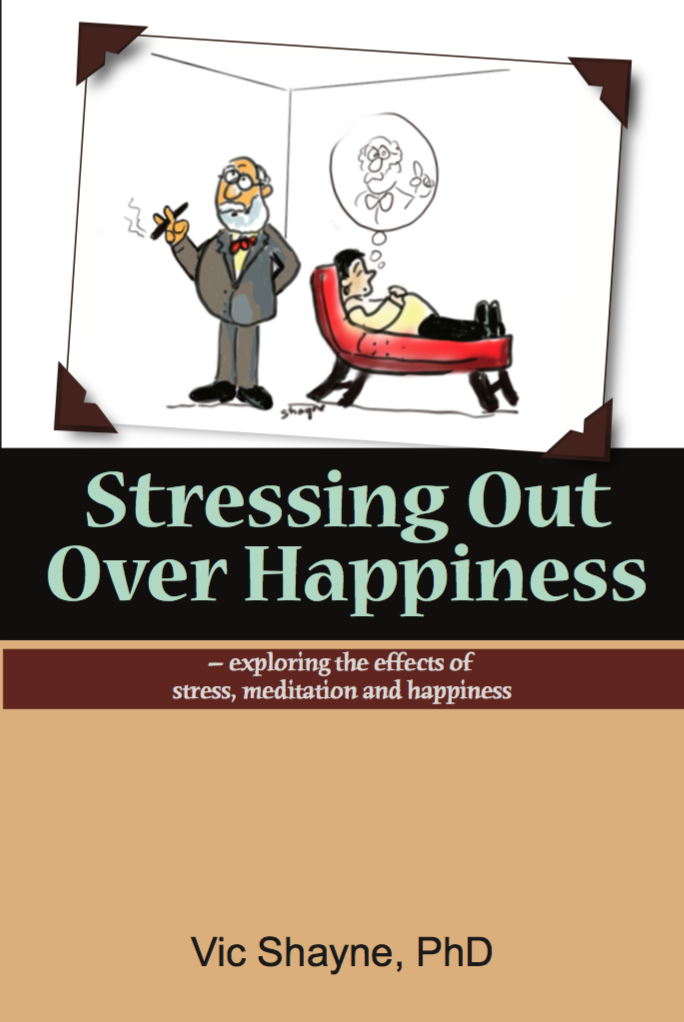
New book: Stressing Out Over Happiness

screen shot of stressing out over happiness cover. pngMy newest book, Stressing Out Over Happiness, is the culmination of several years of research and writing. It began as I was doing research for a novel (not yet published as of this writing) and I wanted to delve in to the protagonist’s particular sense of angst and trauma. As I was doing this, I thought that all this research would make a good book in itself, as a nonfiction self-help book.

Stressing Out Over Happiness is primarily about three things: Stress, Meditation and Happiness. It is a look at stress and happiness from the vantage point of several sciences, including psychology, neuroscience, biology, psychoneuroimmunology, and quantum physics. And, I bring into play the work and teachings of sages throughout history that now seem to be substantiated by leading-edge science.

If you are stressed out or sick, this book will help you. If you are unhappy, depressed or anxious, this book will be great for you to read. If you wonder why self-help, positive thinking isn’t doing a thing for you, this book is perfect for you.

If you are wondering about the meditation part of the equation, then let me tell you. There are two types of Buddhist meditation that have been studied at major universities in conjunction with happiness and stress reduction. I discuss these in the book. One is called mindfulness meditation and the other is loving-kindness meditation (also known as metta, or compassion meditation). While these are not the only types of meditation that are in existence, these are the ones that are most studied and have yielded empirical results.

Within a week or so, a companion to this book will be released. It will cover some of the same material but a little more in detail and with a less formal and more exploratory angle. The idea is allow you to think about the subject matter and to stimulate your impressions and ideas.

Happy reading!

The Super Foods Diet is super for your health!

SUPER-FOODS-DIET-COVERThe Super Foods Diet is the culmination of more than thirty years of research in discovering which foods we should add to our daily diet that provide the most nutrition for a health, prevention, and recovery.

The Super Foods Diet is all about eating specific foods in which scientists have discovered amazing biochemicals known to support cellular function, growth, recovery and optimum health. This book shows how and why super foods are so essential for good health.

The Super Foods Diet is a way of eating that achieves all of the three most important reasons for changing your diet for the better:

• weight control,
• promotion of good health, and
• fighting even the most serious diseases

Food is our best medicine
A diet full of SUPER FOODS, while avoiding so-called junk foods known as a staple in the modern world, can take you out of the running for the most prevalent diseases of our era: cardio-vascular illness, diabetes, cancer, arthritis, Alzheimer’s disease, obesity and more.

Illness isn’t a matter of genetics for most of us; it’s a matter of ignorance, exposure to toxic substances, poor dietary choices, nutrient-depleted soils from poor farming methods, indifference to the state of the planet, and abstinence from earth’s most nutritious foods found right under our noses!


Books on the Self and Happiness


The Self is a Belief

The Self is a Belief is one of my recent releases, and is a close-up look at the self, or egoistic mind, and how it is formed to create what we think is an individual self. For millennia sages of the East have been teaching about this false sense of self as the cause of most suffering. This is because the self identifies with the body and all sorts of objects and people.

The mind is a tool that has evolved to separate all things by way of the five senses. It does this to differentiate shapes, sounds, textures, tastes, and so on. But when this mind becomes conditioned by myriad influences over a lifetime then it comes to apply this same separation to life for psychological purposes. And this is where the self, the egoic self, is born. This conditioned mind becomes attached to ideas, memories, situations, accolades, the body, and on and on. As such it presents a false image of the world and all that is contained within it. It loses the knowledge that it actually exists in one flowing consciousness and that nothing is separate from consciousness.

In The Self is a Belief I bring in a great many voices to weigh in on this idea of consciousness, the self, and the problems that arise from this belief. You can read about yogis, sages, mystics, quantum physicists, neuroscientists, psychologists, and philosophers who all have something interesting to say on the subject.

This book is based on my own personal findings, and at the end of the book, my wife Janice describes the process of self-enquiry that leads to the realization that the self is only a belief. It is a practice that anyone can do if interested enough to uncover the ceaseless cycle of pursuing pleasure and avoiding pain.

———————————————————————————


Stressing Out Over Happiness
— exploring the effects of stress, meditation and happiness

BOOK RELEASE

screen shot of stressing out over happiness cover. pngStressing Out Over Happiness is a new self-help book that merges the wisdom of ancient sages, neuroscientists, psychologists, philosophers and quantum physicists to explore the nature of happiness, the physiological and mental aspects of stress, and how the mind works. This book also delves into the two forms of Buddhist meditation that have been shown in university studies to lessen the effects of stress and lead to greater happiness.

If you are stressed out (who isn’t), anxious, depressed or wandering in a daze, this book should prove very helpful to you. If you are a natural health practitioner, nurse, or therapist, you should read what this work has to say because there is definitely a missing link in today’s health care picture — a holistic paradigm.

The mind is very complicated instrument. Or is it an instrument at all? The truth is that, despite our scientific effort, we are no closer to understanding the mind in terms of its shape, form or existence. We know it by its actions, but we cannot measure it or observe it except by means of its effect on the brain. To study the mind, we have to look into the nature of consciousness, and that is a big undertaking. In this book, though, we do just that. My hope is that this book will compel you to ask your own questions and explore the workings and nature of your own mind and your own existence. In the end, this should not only bring down stress levels, but it should also make you much happier.