November 1st, 2009 posted in Remember Us

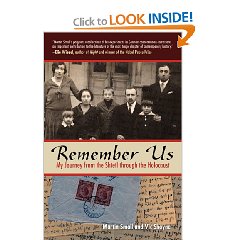
Several years ago Martin Small, in his late 80s, approached Vic Shayne about writing his memoirs. Following a couple of initial meetings, Shayne decided that this project was well worth delving into for two main reasons. First, Martin Small was an outspoken and fascinating subject. Second, his story was literally a hero’s journey.
(Martin Small is pictured to the right at a recent book signing for Remember Us, his life’s story)
Shayne says of the book’s subject, “Martin Small is the rare and wonderful type of person who makes friends wherever he goes. His entire life, by virtue of his extroverted personality and natural curiosity, is marked by the relationships he forges. And he forges them quickly because he’s interested in people, who they are, where they come from, their families, their languages and their customs. It is no wonder that he has mastered more than 10 languages. His inquisitive nature dictates that he jumps head-first into every culture he comes into contact with. Within ten minutes of speaking with Martin Small, he knows all about you. And the reason is that he really cares.”
When you read Remember Us, Martin Small’s story, you’ll see that he started out in life speaking three main languages: Yiddish, Russian and Polish. By the time he was five he was speaking and reading Hebrew as well. After the war, which is a period of great wonder, as covered in the book, Martin Small took a train to Italy from Salzburg, Austria, as thousands of Italian POWs were returning home from Russia. Instantly making friends with an Italian officer, Martin at last made it to Rome and in no time was speaking like a native. He made plenty of friends from Anzio to Ostia to Turin and back.
The second reason Vic Shayne took on this project, as stated, is that Martin Small’s life follows the format of a hero’s journey. An avid reader of Joseph Campbell, Shayne recognized this aspect of Martin’s story right away. He says, “The hero’s journey is a mythical format that offers readers not just an interesting story, but the kind of story that touches you to the core; it is felt in the heart and finds its way to the depths of the mind. The hero’s journey takes the protagonist from his home, away from those he loves and all that is familiar to him and brings him into the world on an adventure filled with obstacles, dangers and even rewards. Martin Small’s book, therefore, reads like a novel, yet knowing that it is true puts you on the edge of your seat. It’s a fascinating adventure, but you would never want to go through it yourself. I am still in awe of Martin Small and all that he has witnessed, lost, accomplished and learned. To me he will always be a hero. Certainly, he has been victimized, but Martin Small is not a victim. He is, in his own words, a survivor. There’s a tremendous difference.”
The hero’s journey finds the hero, by the end of the journey, a changed and wiser individual who sees the world in a new light. Nothing could be more true of Martin Small’s journey from his shtetl in Poland to the concentration camps of the Nazis, wandering as a displaced person after the war, into Italy, and beyond.
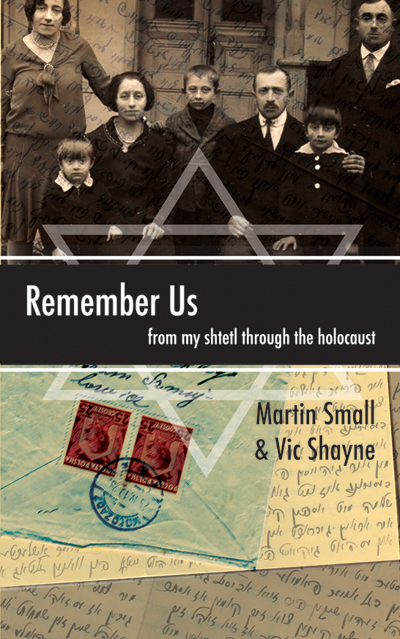
Remember Us: From my shtetl through the Holocaust is available for purchase through amazon.com online by clicking here.
May 20th, 2009 posted in Remember Us
By Vic Shayne
I’ve been a writer for the past 30 years, and my most recent challenge was a book for a 90-year-old Holocaust survivor. This project involved endless hours of research that has led me not only to a dearth of post-war testimonials, but also organized websites denying that this event ever happened. This revisionist teaching is based on a desire to invalidate human suffering, and recognize the loss of millions of lives, mass murders and a genocidal program that was anything but a secret.
I got to thinking: Is it possible to just rewrite history, deny that events ever happened, tell eye witnesses and participants that they were all deluded and that atrocities never occurred? It made me wonder how far we can take this idea of revisionism.
What if we, from here on, decided that we would not teach about the reality of American slavery and the struggle for civil and human rights? In this terrible scenario, African Americans would be denied their claim to a heritage of suffering, senseless lynchings, being torn from their families and tribes in Africa and being treated as subhumans. Did this really happen? Who says so? No witness is alive to testify that slavery and hardships were ever foisted upon these Africans. Just like the Holocaust, we could deny it ever happened. We could say, sure there were some Africans brought on ships to America, but they didn’t die because they were bound by chains in the hulls of rickety ships. They died merely of old age or because they were sick before the voyage ever began. And when they came to America they weren’t really slaves, they were just servants, volunteering for work. They have no right to complain or demand the world’s attention for any injustice.
Or we could look at the plight of the Irish and the supposed potato famine. We can say this was not a real event. We can rewrite this period of history and say that the Irish never suffered mass starvation, prejudice and near annihilation. We could all agree that they came in waves at the turn of the last century just to seek their fortunes, with no other motivating factors; that they were selfish fortune-seekers, drunks and misfits. We could say that the half million to a million who starved to death in agony never existed, that the Irish were never mistreated by the British; that they just made everything up.
In China, in 1937, history tells us that the Japanese invaded the city of Nanking and created a bloody, horrific, murderous event. Did this, what is now called The Rape of Nanking, ever really happen? Who says so? Maybe, we could say, it never happened. There is nobody who can prove that a six-week massacre yielding 300,000 dead ever really happened. We could chalk it all up to war. Maybe we could even say that the Chinese women, children and men deserved to be tortured to death, with adolescent girls gang raped while their parents were forced to watch in horror; they were partly to blame for the events that led to babies being bayoneted, picked up by their legs and tossed into the air into vats of boiling water, and the women and girls deserved being raped because this is what soldiers do. But it’s all overblown, exaggerated.
Maybe Japanese Americans were never forced across the United States into internment camps during World War II. Maybe their homes were not lost to them, as well as their jobs and their relationships and their livelihoods. Maybe it never happened that there was a discriminatory policy applied to them that didn’t apply to white Americans. Maybe the Japanese Americans are just complaining about a little misunderstanding. Perhaps they are making it all up because they just want attention or to collect money in some way.
And perhaps we can say that all those American soldiers who came across the Nazi death camps were just seeing things. The smell of death that could never leave their sinuses was a figment of their imagination. Plus, those American in WWII who died a slow and miserable death on the death marches in Asia were lying.
Where does any of this end? Are we to allow hate groups to define history for us? History is a human event, not a collection of statistics, troop movements, military campaigns and weaponry. History is defined by what happened to real people with real families and cultures and homes and relationships. The Holocaust in WWII Europe happened, and it was worse than history records, because you cannot quantify human suffering, night mares, emotional breakdowns, recurring anguish, heartbreak or unresolved trauma. Real were the concentration camps, gas chambers, killing fields and precise plans for genocide. Testimonies exist from American soldiers, General Eisenhower, Nazi officials, resistance fighters and thousands of victims. This event happened, and it was actually even worse than is recorded by our official history.
What also happened was a genocidal policy against Native Americans who were marched to death through unbearable winter weather from the east to Midwest. These people who survived the brutality of the Trail of Tears were put on reservations, given small pox, robbed of their culture. Ruined and left to rot. The Irish were nearly destroyed by British racism. The Japanese waged an unforgettable massacre on the Chinese, and the Chinese on the Tibetans. Since February 2003, the Sudanese government in Khartoum and the government-sponsored Janjaweed militia have used rape, displacement, organized starvation and mass murder to kill more than 400,000 and displace 2.5 million. Violence, disease and displacement continue to kill thousands of innocent Darfurians every month. This is happening NOW. Can we say that it is not?
Will we be allowed to be bullied by racist, extremist, ignorant, unread, hateful revisionists? Will we sit by and accept the president of Iran’s hateful campaign of Holocaust denial as a means to invalidate the nation of Israel? Did Martin Luther King die for no good reason? Were our brave young soldiers massacred on the shores of France to the point wherein the sea turned the color of human blood for a non-event erroneously called the Normandy invasion? Do we not recognize their heroism because some group claims it never happened? As a great nation of free thinkers representing a wide array of rich cultural, religious and ethnic diversity, we as proud Americans must validate the suffering of others and disallow the hate that is historical revisionism that hides behind a veil of pseudo-intellectual discussion. If we don’t stand up to this ugliness in our schools, churches, mosques, synagogues, communities and media, then we will allow history and all its lessons to dissolve and we will lay the foundation for greater atrocities to come.
December 20th, 2008 posted in Remember Us
Martin Small, the subject of Remember Us: From my shtetl through the Holocaust, passed away late November, 2008, nearly making it to his 92nd birthday.
Pictured here with his wife Doris (circa 1950), Martin Small led a life that was the kind of adventure few can appreciate. And yet when we read about his exploits in Remember Us, we are reminded of the tremendous luck, perseverance, imagination and strength that it took for those few survivors to live to tell about the Holocaust years.
So traumatic were the years between 1940 and 1945 that Martin Small, for the rest of his life, introduced himself to everyone he met as a Holocaust survivor. He yearned to tell his story after six decades following the events that took place. Before this period, Martin kept it all to himself, save for family members and a few close friends. Trauma does unimaginable things to the mind. Until his dying day, he was tormented by dreams of a murdered family, a shattered culture, loss of a beloved little village and the grip of death in the concentration camp.
Now Martin is gone from our lives. It was difficult to watch him suffer from pancreatic cancer at the end of his life, considering all of the suffering he had already known, both physically and emotionally. His last words to me over the telephone less than a day before he died, were, “Why aren’t they coming for me? They need to come for me.” He longed to be taken to the world of his lost relatives and his beloved shtetl.
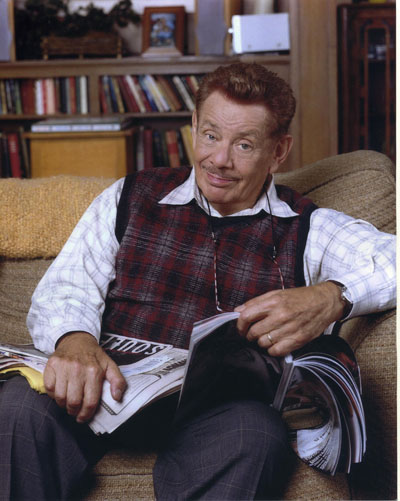
As a result of writing and publishing Martin Small’s life story, overwhelmingly, I have received comments about Remember Us that pertain less to the Holocaust than to Martin’s recollections of his shtetl. This is a point of connection for countless people. Actor Jerry Stiller told me, “This is a wonderful book. I can now look into the past and see what shtetl life was like. I can get a good picture of Frampol where my family came from.”
Certainly, Martin Small’s remembrances in Remember Us are mixed with tears and laughter. Martin’s story, especially by his own admission, is unimaginable.
October 1st, 2008 posted in Remember Us
The latest article to run on Martin Small, his exploits, and new book was published in the Broomfield Enterprise, Martin’s hometown newspaper.
September 3rd, 2008 posted in Remember Us
Jerry Stiller, well known for his role on the Seinfeld TV show, among others, recently wrote to Vic Shayne in praise of Remember Us, the story of Holocaust survivor Martin Small.
Stiller’s family is from Frampol, a Polish shtetl, and he said that the account of Martin’s life in his own shtetl gave him pause to think about his roots.
Jerry Stiller wrote:
“Dear Vic,
Your writing was storytelling at its finest. I could hear Martin Small speaking. The Holocaust has never penetrated my senses in such a meaningful way. Who would believe human beings could turn upon fellow human beings with such mindless savagery…
As an eighteen-year-old G.I. stationed in Italy in 1946, part of the Army of Occupation, I was invited to attend Rosh Hashanah services in a Naples Synagogue by Jews who were awaiting resettlement by the Joint Distribution Committee. When the service ended a family invited me to their flat for dinner. I remember them to this day. The father, mother and their little daughter. I bought her a doll. We finished supper and talked. They didn’t say much about how they managed to survive. As a young Jewish kid from New York I was aware of how lucky I was to have experienced that moment. When dinner was over I left them some lire and said goodbye thinking I’d never see them again.
Two years later I was a civilian riding a bus in N.Y.C. looking for a job. A man got on the bus and in Yiddish asked the driver for directions. The driver didn’t understand Yiddish. I took it upon myself to translate. Suddenly the man’s face seemed vaguely familiar. In a few seconds I realized he was the man who invited me to dinner in Naples. My mind was blown. We talked and he told me he and the family were relocated to America and were living at 61 Columbia Street on the Lower East Side, the same tenement my mother lived in when she arrived in the United States. “We still have the doll”, the man said. I could not believe this was happening.
These are the stories your writing ignited in me. Of course it parallels the story about Mr. Curry, the policeman Martin Small met in New York who he had first met as a G.I. at that horrible camp.
Early in our marriage Anne and I lived in Washington Heights. Most of the tenants were survivors. Each night they would sit in beach chairs on Upper Riverside Drive conversing. Being inquisitive I would sit close enough to hear them tell stories about their lives. At the time they called Washington Heights the “Ferte Reich”.
“Remember Us from my Shtetl” also put me in touch with Frampol, a town in Poland my mother came from probably not unlike Maitchet. Your description of the town opened my mind to what my mother’s life was probably like as a young girl in the town of Frampol, which she never spoke much of.
Vic, your writing is so moving. Thanks for asking me to read this wonderful story, which will stay with me forever. Your book matches in eloquence Tom Brokaw’s ‘The Greatest Generation.”
August 18th, 2008 posted in Remember Us
Martin Small, Holocaust survivor and subject of the new book about his life, Remember Us: from my shtetl through the Holocaust, in a miraculous fundraising effort, has given an old Torah a new home. Martin is donating the proceeds from his book sales to the Martin and Doris Small Torah Fund at his synagogue in Boulder, Bonai Shalom. Within just a few weeks of starting the fundraiser, the synagogue was able to purchase a Torah that, like Martin himself, survived the Holocaust.
Martin, pictured to the left of Rabbi Marc Soloway (photo credit Ken Miller Photography), gazes at the decades-old Torah as it is presented to his synagogue in early August. Martin said, “This Torah, like me, has traveled around the world, lost and displaced. Now it has a home. Now it can finally rest.”
The synagogue was packed to standing room only to witness Martin and his wife Doris as they placed the Torah into the ark during the ceremony. Upon closing the ark, Doris gazed at the new Torah and said, “Welcome home.”
It is believed that before the war the Torah was hidden from its original site in Poland or Germany and smuggled into Israel before eventually coming to the United States.
Bonai Shalom’s Torah, since the inception of the synagogue, has been on loan from another synagogue. Torahs are very expensive because they are handwritten by dedicated scribes who are trained in Hebrew calligraphy. They can range in price in the tens of thousands of dollars. “But,” said Martin Small, “the greatest thing about this Torah is not only that it is the law of the people, but more importantly, that it is a survivor. This is a most symbolic truth. Like the Jewish people, like myself, survival is a miracle, yet it is also a reality that we treasure. The value of our new Torah is in its character, not in its price tag.”
Martin Small read from the Torah while his grandson stood next to him holding a pole from the chupah. Martin said later, “My grandfather taught me the ways of our people. His presence is always with me, guiding me through my life. He was murdered along with my entire family in our shtetl in Maitchet, yet my grandfather remained with me through my darkest hours, through torture and starvation, through Mauthausen concentration camp and while I fought for the last vestiges of my people where we made our stand on the soil of Israel in 1948. Now it shall be to my grandfather that I shall return. I wait for him and he waits for me.”
Remember Us, the story of Martin Small, can be found and ordered at your local bookstore or by clicking here.
August 13th, 2008 posted in Remember Us
Irena Sendler, born in 1910, saved 2500 Jewish infants from certain death in the Warsaw Ghetto. She smuggled the children out of the ghetto in sacks under the Nazis’ noses
Irena Sendler was raised by her Catholic parents to respect and love people regardless of their ethnicity or social status. Her father, a physician, died from typhus that he contracted during an epidemic in 1917. He was the only doctor in his town near Warsaw who would treat the poor, mostly Jewish victims of this tragic disease. As he was dying, he told 7-year-old Irena, “If you see someone drowning you must try to rescue them, even if you cannot swim.”
In 1939 the Nazis swept through Poland and imprisoned the Jews in ghettos where they were first starved to death and then systematically murdered in killing camps. Irena, by than a social worker in Warsaw, saw the Jewish people drowning and resolved to do what she could to rescue as many as possible, especially the children. Working with a network of other social workers and Poles, mostly women, she smuggled 2,500 children out of the Warsaw ghetto and hid them safely until the end of the war. Sendler took great risks – obtaining forged papers for the children, disguising herself as an infection control nurse, diverting German occupation funds for the support of children in hiding.
She entered the Warsaw ghetto, sometimes two and three times a day, and talked Jewish parents into giving up their children. Sendler drugged the babies with sedatives and smuggled them past Nazi guards in gunny sacks, boxes and coffins. She helped the older ones escape through the sewers, through secret openings in the wall, through the courthouse, through churches, any clever way she and her network could evade the Nazis. Once outside the ghetto walls, Sendler gave the children false names and documents and placed them in convents, orphanages and with Polish families. In 1942 the Polish underground organization ZEGOTA recruited her to lead their Children’s Division, providing her with money and support. Her hope was that after the war she could reunite the children with surviving relatives, or at least return their Jewish identities. To that end she kept thin tissue paper lists of each child’s Jewish name, their Polish name and address.
Irena hid her precious lists in glass jars buried under an apple tree in the back yard of one of her co-conspirators. In 1943 Irena Sendler was arrested, tortured and sentenced to death by firing squad. She never divulged the location of the lists or her Polish underground contacts. At the last moment she was saved by ZEGOTA which bribed a guard to secure her freedom. She still bears the scars and disability of her torture. After the war, the Communist government suppressed any recognition of the courageous anti-fascist partisans, most of whom were also anti-Communists. Irena’s story and those of other courageous Poles, were buried and forgotten. Her courage and resourcefulness were recognized by Israel in 1965 when she was awarded the Yad Vashem medal given to Righteous Gentiles who risked their own lives to save Jews during the Holocaust. In 1983 a tree was planted in her honor in Israel. But in general, the world was silent about Irena Sendler until 1999, when three Kansas teens uncovered Irena’s story. Liz Cambers, Megan Stewart, and Sabrina Coons (a fourth, Jessica Shelton, joined later), students at rural Uniontown High School were looking for a National History Day project. Their teacher, Norm Conard gave them a short paragraph about Irena Sendler from a 1994 U.S. News and World Report story entitled “The Other Schindlers” and they decided to research her life. According to the article, Irena Sendler smuggled 2,500 Jewish children out of the Warsaw ghetto just prior to its liquidation in 1943.
With the help and inspiration of their teacher, they began to reconstruct the remarkable achievements of this forgotten hero of the Holocaust. The three Kansas girls assumed Irena Sendler must be dead and searched for her burial site. To their surprise and delight, they discovered that she was still alive, 90-years-old, living with relatives in a small apartment in Warsaw. They created a play about her rescue efforts called Life in a Jar, which has since been performed more than 200 times in the U.S., Canada and Poland. In May 2001 they visited Irena in Warsaw and began a friendship that has inspired other Polish Righteous Gentiles to break their silence. The visit also made Irena’s story known to the world, through the international press. They have visited Irena and Warsaw on four different occasions. Irena is now a Polish national hero and Poland is coming to terms with the painful legacy of the war and the Holocaust. Irena last visited with the Life in a Jar students on May 3, 2008. She passed away on May 12, 2008, at the age of 98.
June 26th, 2008 posted in Remember Us
Martin Small, 91, remembers all too well the terrible hell of Mauthausen concentration camp. When the camp was liberated in the spring of 1945 by American forces, Martin had been left for dead in the barracks of the subcamp of Gusen. He was still in his twenties, barely 75 pounds and unconscious when an American GI picked him up and carried him to an Army ambulance headed for a hospital in Linz.
Before liberation, he worked in the crematoria, burying inmates who had lost their lives due to hunger, disease, murder, torture, the cold and death in the gas chambers, as pictured in this historical photograph to the right.
“I still don’t know how I survived,” says Martin Small, who currently lives with his wife, Doris, in Colorado.
Martin’s life story is in a new book called Remember Us: From my shtetl through the Holocaust, sparing the reader with the most gruesome details of Mauthausen, is a work of history and personal struggle for survival. Remember Us focuses mostly on Martin’s shtetl life in pre-war Poland and his plight as a refugee. Yet, if the reader cares to investigate on his own, there are many sources on Mauthausen concentration camp on the internet.
In this photo, above, a guard with a machine gun watches over prisoners in the main courtyard.
For more information on Mauthausen concentration camp, Austria, including photographs, click here and here.
June 25th, 2008 posted in Remember Us
Remember Us, the book about Holocaust survivor Martin Small, has only been on the market for a couple of weeks, yet copies are being sold out faster than distributors can keep up with demand. We are thrilled that this book is so well received, and here are a couple of the first impressions by readers
In his poignant memoir, Remember Us, Martin Small relives his warm family life in the shtetl and the horrors that followed with the German occupation. Survival, however, is the inspiring message of this brave, spirited man. His story is action-packed (to say the least) and I read it in 2 sittings. It is deeply moving and, yes, I will “remember.” It would make a great TV film!!
— Doris Wechter, Santa Barbara, Calif.
——————————-
This is the only survivor book I ever read that has avoided the gruesome realities of concentration camps and focuses on other aspects of the Holocaust that I was completely unaware of. After reading about Martin Small’s grandfather, I was truly impressed by the richness of his early life and the gravity of what happened in human terms. This book reads like a novel, but grips you even more because it’s true.
— Ed Jensen, Philadelphia
—————————————–
June 22nd, 2008 posted in Remember Us
Remember Us: My Shtetl Through the Holocaust is available at long last, following more than three intensive years of writing and research.
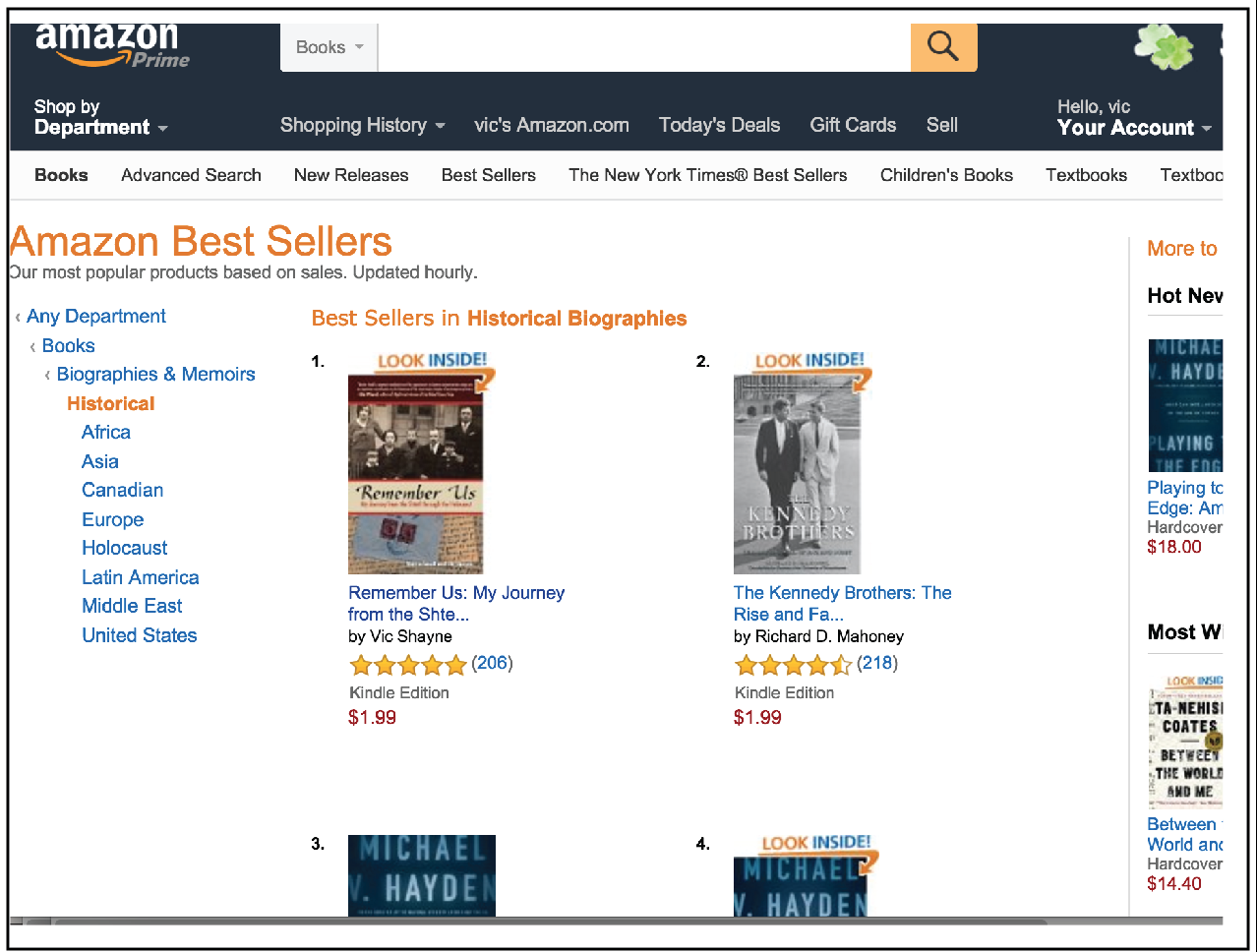
If you’re unfamiliar with internet searches, simply go to amazon.com and type in the name “Martin Small,” in quotation marks when searching under “books,” then this book will appear. Even easier, Martin’s name also appears on the iuniverse.com website page here.
In a week or so, as articles have been going out publicizing Mr Small’s story, google.com will have picked up his name in connection with the book, which will also add to the ease of locating it on amazon.com and through other sellers.
In the meantime, Remember Us is now available for ordering online or from your bookseller.
This book is widely heralded and is selling out at every book signing. Amazon.com cannot keep up with the demand, so it is easiest right now to order directly from iuniverse.com
|
One cannot read this story , come away untouched by Mr. Small’s detailed description of his home so many years ago. This book is a monument to all who lost their lives because they were Jews. I have long thought how hard it is to be Jewish and survive in a climate of hate and ignorance.
Martin, may God continue to bless you, have his light shine upon you and bring you peace.
— Ron Shayne, Miami, Florida
——————————–
This is a magnificent account of the horrors of the Holocaust as lived by Martin Small. Author Vic Shayne has been able to give the reader the feeling of presence during these horrific events. Mr. Small’s recollection is vivid and tragic at the same time. Having lost 86 members of his family to the murderous Nazi’s and their collaborators he has dedicated his life to memorialize these unspeakable events in his art and poetry. Now his book ‘Remember Us: From My Shtetl Through the Holocaust’ brings his message to new heights with the chant of ‘Never Again’ and ‘We Shall Never Forget’. This Herculean effort should be obligatory reading for everyone so that the horrors of the Holocaust as told by survivor Martin Small to Vic Shayne are understood and remembered forever.
— Pedro A. Rubio (The Woodlands, TX USA)